
Patterns Set Into the Slab Itself
Stamped concrete in Fayetteville for patios, driveways, and walkways that need texture and color built into the surface rather than applied as a coating
Elite Contractors LLC installs stamped concrete patios, driveways, and walkways in Fayetteville and nearby communities, with the texture and color set into the surface while the concrete is still workable. The pattern becomes part of the slab rather than a coating on top, which means it won't peel or separate as the surface ages. Many homes in Fayetteville and Peachtree City have plain slabs that are cracked or dated, and stamping offers a way to change the appearance without tearing out the existing concrete and starting over.
After a free estimate, the crew pours the slab, applies a release agent to prevent the stamps from bonding to the wet concrete, and presses the pattern into the surface at the right moment in the set. Color is added as a hardener mixed into the top layer or as part of the release agent, and a sealer is applied once the surface has cured to protect the finish and deepen the color. The timing of the stamping is critical—too early and the pattern distorts, too late and the concrete won't take the impression.
Request a free estimate to review pattern options and confirm the preparation required for your existing or new slab.
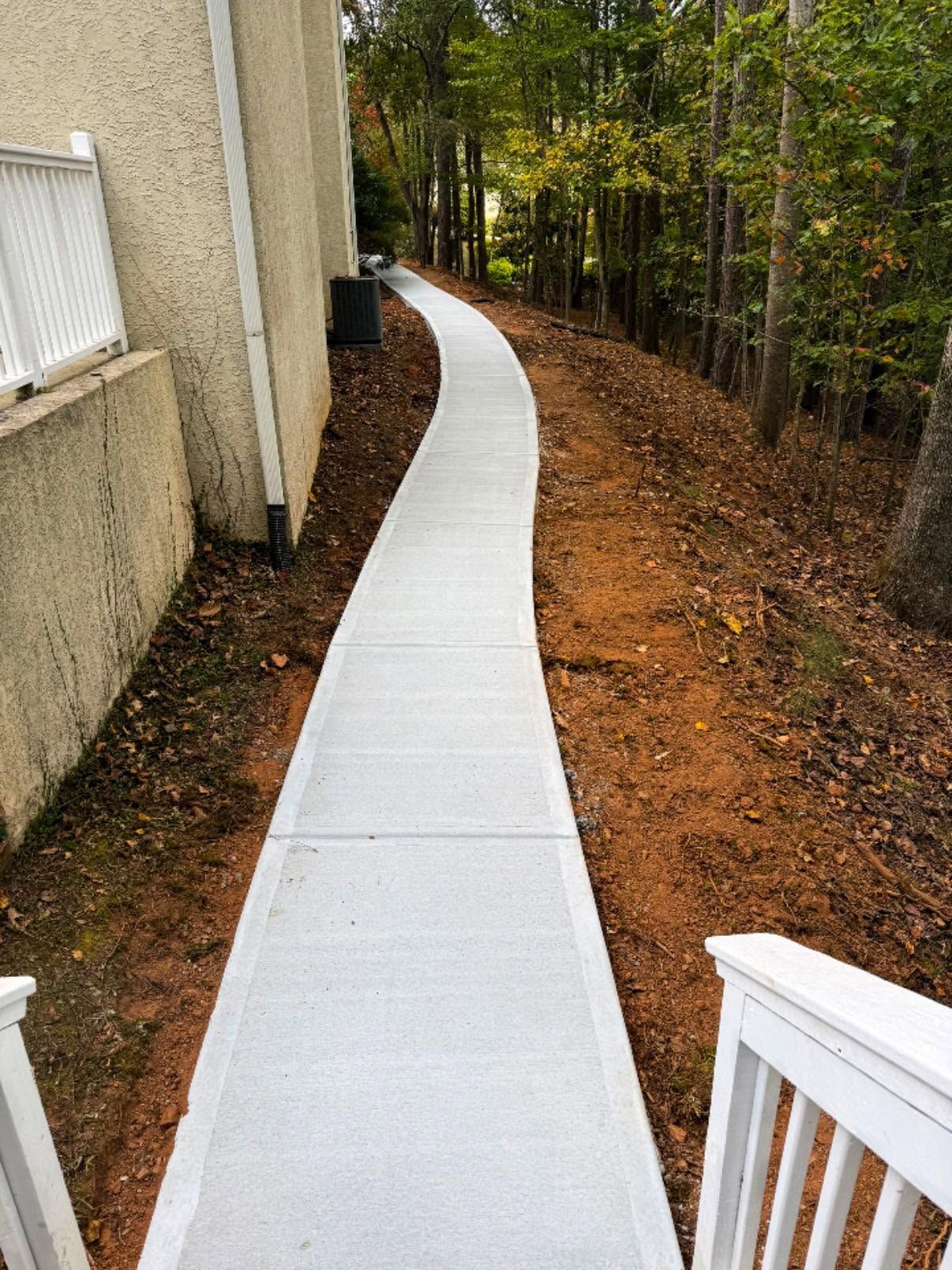
How Stamping Addresses Surface Appearance
Stamped concrete replicates the look of stone, brick, tile, or wood by using rigid mats that press a three-dimensional texture into the surface. The mats are placed in sequence to maintain pattern alignment, and edges are hand-tooled where the pattern meets walls, curbs, or landscape borders. Color is introduced either as a dry-shake hardener broadcast onto the wet surface or as a tinted release agent applied before stamping, and both methods result in variegated tones that mimic natural materials.
Once the sealer has cured, the surface shows a consistent pattern with color variation that doesn't fade or wear off with foot traffic or vehicle use. The texture provides traction, and the sealer protects the color from UV exposure and surface abrasion. Stamped driveways handle the same loads as plain concrete, and stamped patios resist staining from outdoor furniture and foot traffic.
The process includes pouring, coloring, stamping, and sealing. It does not include removal of old slabs, grading adjustments, or structural repairs to cracked or settled concrete. Pattern selection depends on the size of the area and the look you want, with larger patterns suited to wide expanses and tighter patterns used for walkways or smaller patios.
Answers About How the Work Is Done
Property owners in Fayetteville and Tyrone often ask about the durability of stamped finishes and what the installation process requires.
What is the release agent used during stamping?
The release agent is a powder or liquid applied to the concrete surface before the stamp mats are pressed down. It prevents the mats from sticking to the wet concrete and allows the pattern to release cleanly. Tinted release agents also add secondary color to the surface, creating the variation seen in natural stone or brick.
How does stamped concrete hold up compared to plain concrete?
Stamped concrete has the same structural strength as plain concrete poured to the same thickness and over the same base. The pattern is an imprint, not a separate layer, so it does not peel or delaminate. The sealer protects the color and makes the surface easier to clean, but it will need to be reapplied every few years depending on traffic and exposure.
What can you do to maintain the finish after installation?
Sweep or rinse the surface regularly to remove dirt and debris that can dull the sealer. Reapply sealer every two to three years to maintain the color depth and surface protection. Avoid using deicing salts or harsh chemicals that can damage the sealer or etch the concrete underneath.
How is the pattern aligned across a large area?
The stamp mats are placed in a staggered sequence, with each mat overlapping the previous impression to maintain the pattern flow. Edges and corners are hand-tooled using smaller texture skins or trowels to match the main pattern. The crew works quickly while the concrete is still within the working window, which is why timing and weather conditions matter during installation.
What does the surface look like immediately after stamping versus after sealing?
Immediately after stamping, the pattern is visible but the surface appears dull and dusty from the release agent. After washing and sealing, the color deepens, the texture becomes more defined, and the surface takes on a slight sheen that highlights the pattern detail and color variation.
Elite Contractors LLC also installs stamped concrete patios, driveways, and
walkways in Peachtree City, Tyrone, Newnan, McDonough, and Jonesboro. Arrange a site consultation to confirm the pattern and color options suited to your project.