Finishes Applied Without Replacing the Slab
Decorative concrete in Fayetteville for garages, patios, and commercial floors that need color, texture, or protective coatings without full replacement
Garages, covered patios, and commercial floors in Newnan and Jonesboro are often plain gray slabs that can be upgraded without replacing them. Elite Contractors LLC provides decorative concrete finishes, including coloring, overlays, and floor coatings, for homes and businesses in Fayetteville and surrounding areas. The existing surface is assessed and cleaned, repairs are made where the concrete has spalled or cracked, and the decorative system is applied in layers, with the color and finish chosen for the traffic and exposure the surface will see.
The process begins with a free estimate that evaluates the condition of the existing slab, identifies any structural issues that need repair first, and confirms the coating or overlay system appropriate for the location and use. The surface is then cleaned to remove oil, dirt, or previous coatings that would prevent adhesion. Cracks are filled, and low spots are leveled with patching compound. The decorative material is applied, whether that's a stain, dye, epoxy coating, or polymer overlay, and a sealer or topcoat is added to protect the finish and control the sheen.
Schedule a free estimate to evaluate your existing slab and confirm which decorative system will perform under your specific conditions.
What Decorative Systems Actually Accomplish
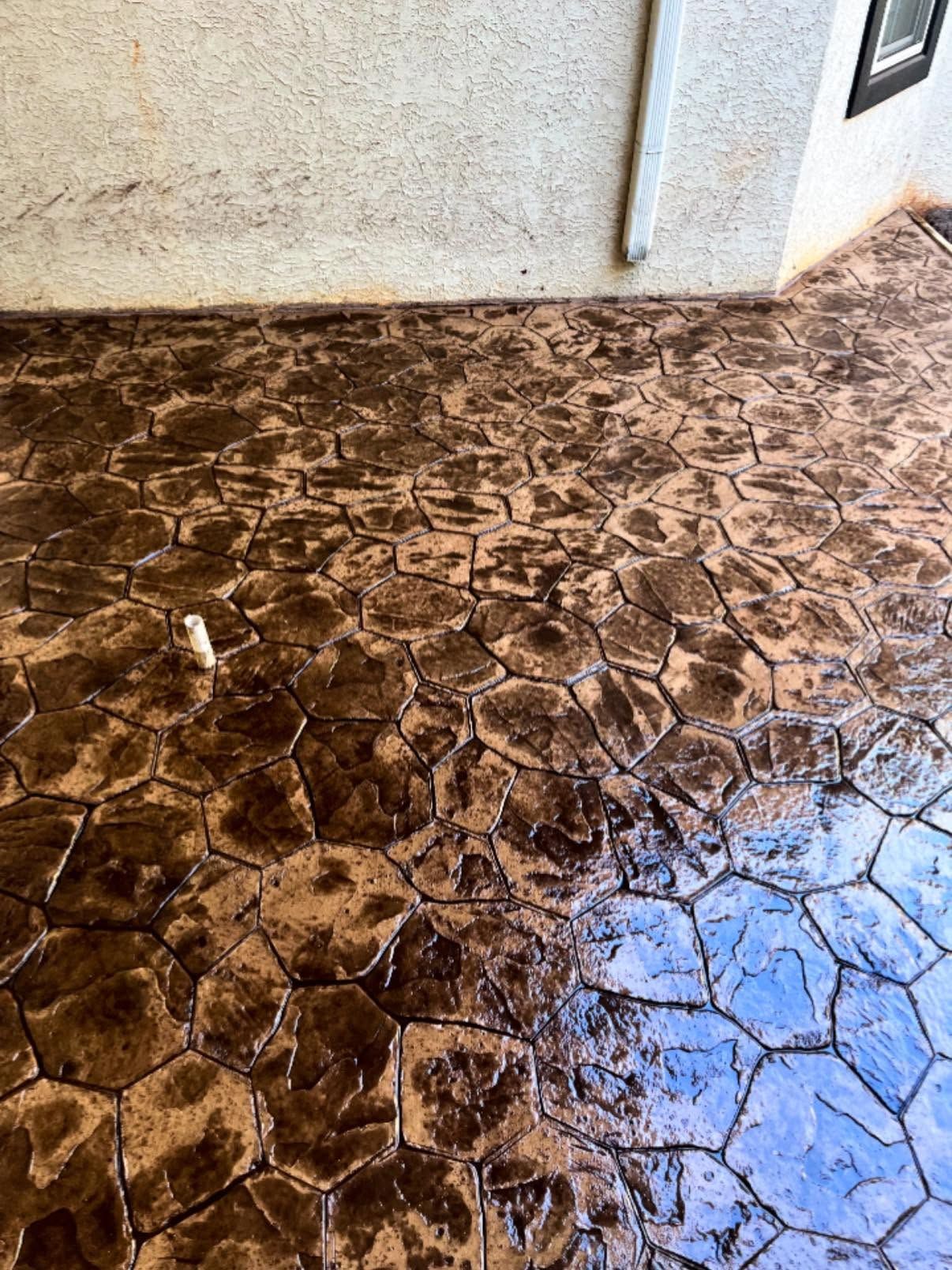
Decorative concrete systems change the appearance and performance of an existing slab by adding color, texture, or a protective layer that resists staining, abrasion, or chemical exposure. Acid stains react with the minerals in the concrete to produce variegated earth tones, while water-based stains and dyes offer a wider color range and more uniform coverage. Epoxy coatings bond to the surface and create a hard, chemical-resistant layer suited to garage floors and commercial spaces. Polymer overlays add a thin layer of cementitious material that can be textured, stamped, or troweled smooth, covering minor surface imperfections and providing a fresh canvas for color.
After the coating or overlay has cured and the sealer is applied, the surface shows consistent color, hides previous stains or discoloration, and becomes easier to clean. Garage floors resist oil stains and tire marks, commercial floors handle foot traffic without showing wear, and covered patios take on a finished appearance that complements outdoor living spaces.
The work includes surface preparation, crack repair, application of the decorative system, and sealing. It does not include structural slab replacement, subgrade correction, or removal of heavy coatings that require specialized equipment. The choice of system depends on the existing surface condition, the level of traffic, and whether the slab is indoors, outdoors, or under a roof.
Questions Before Starting Your Project
Homeowners and business owners in Fayetteville often ask about the durability of decorative finishes and what preparation is required before the coating is applied.
What is the difference between a stain and a coating?
A stain penetrates the surface and chemically reacts with or absorbs into the concrete, changing its color without adding a film on top. A coating, such as epoxy or urethane, forms a layer on the surface that bonds to the concrete and provides color, texture, and protection. Stains require a sealer to protect the color, while coatings include their own protective properties.
How is the existing slab prepared before the decorative system is applied?
The surface is cleaned using a pressure washer, grinder, or chemical degreaser to remove oil, dirt, previous sealers, and any contaminants that would prevent bonding. Cracks are routed and filled, spalled areas are patched, and the surface is profiled to create the texture needed for the coating to adhere properly.
What happens if the slab has existing cracks or damage?
Minor cracks are filled with epoxy or flexible filler before the decorative system is applied, and the repair is blended into the surrounding surface. Wider cracks or structural movement may require additional stabilization or may remain visible through thin coatings. Overlays can cover and hide cracks better than stains or thin coatings, but they add thickness to the surface.
How long does a decorative finish last before it needs to be reapplied?
Lifespan depends on the system used and the traffic it sees. Stained and sealed floors in covered areas can last years before the sealer needs refreshing, while garage epoxy coatings may show wear in high-traffic lanes after several years. Commercial floors under heavy use may need topcoat renewal more frequently. Proper cleaning and avoiding harsh chemicals extend the finish life.
What does the floor look like once the coating has cured?
The surface shows even color without the patchy gray appearance of plain concrete, and any texture or flake additives are locked into the coating. The finish reflects light based on the sheen level chosen, from matte to high gloss, and the floor is noticeably easier to sweep and clean. Stains show natural variation, while solid-color coatings provide uniform coverage.
Elite Contractors LLC also provides decorative concrete finishes in Peachtree City, Tyrone, Newnan, McDonough, and Jonesboro. Contact Elite Contractors LLC to review coating options and confirm the preparation required for your slab.