Extending the Life of Damaged Slabs
Concrete repair in Fayetteville for cracked, spalled, and worn driveways, walkways, patios, and exterior foundation faces that can be stabilized and restored
Older homes in Fayetteville and McDonough often have worn or cracked slabs and water-damaged block that repair can extend by years. Elite Contractors LLC repairs cracked, spalled, and worn concrete in Fayetteville and nearby areas, including driveways, walkways, patios, and exterior foundation faces, with work focused on cutting back to sound concrete, bonding new material securely, and finishing the repair to blend with the surrounding surface. You need this service when cracks are widening, when the surface is flaking or chipping, or when sections of a driveway or walkway have settled and created trip hazards.
After a free estimate that identifies the cause and extent of the damage, the crew cuts or grinds back to sound concrete, cleans the repair area to remove loose material and contaminants, and applies a bonding agent that helps the new material adhere to the old. Repair material is then placed, compacted into the void, and finished to match the texture and level of the existing slab. Exterior foundation faces receive chipping repair and aesthetic touch-ups; structural foundation work is not taken on.
Request a free estimate to determine whether your damaged concrete can be repaired or requires replacement.
Why Proper Repair Requires Sound Concrete Underneath
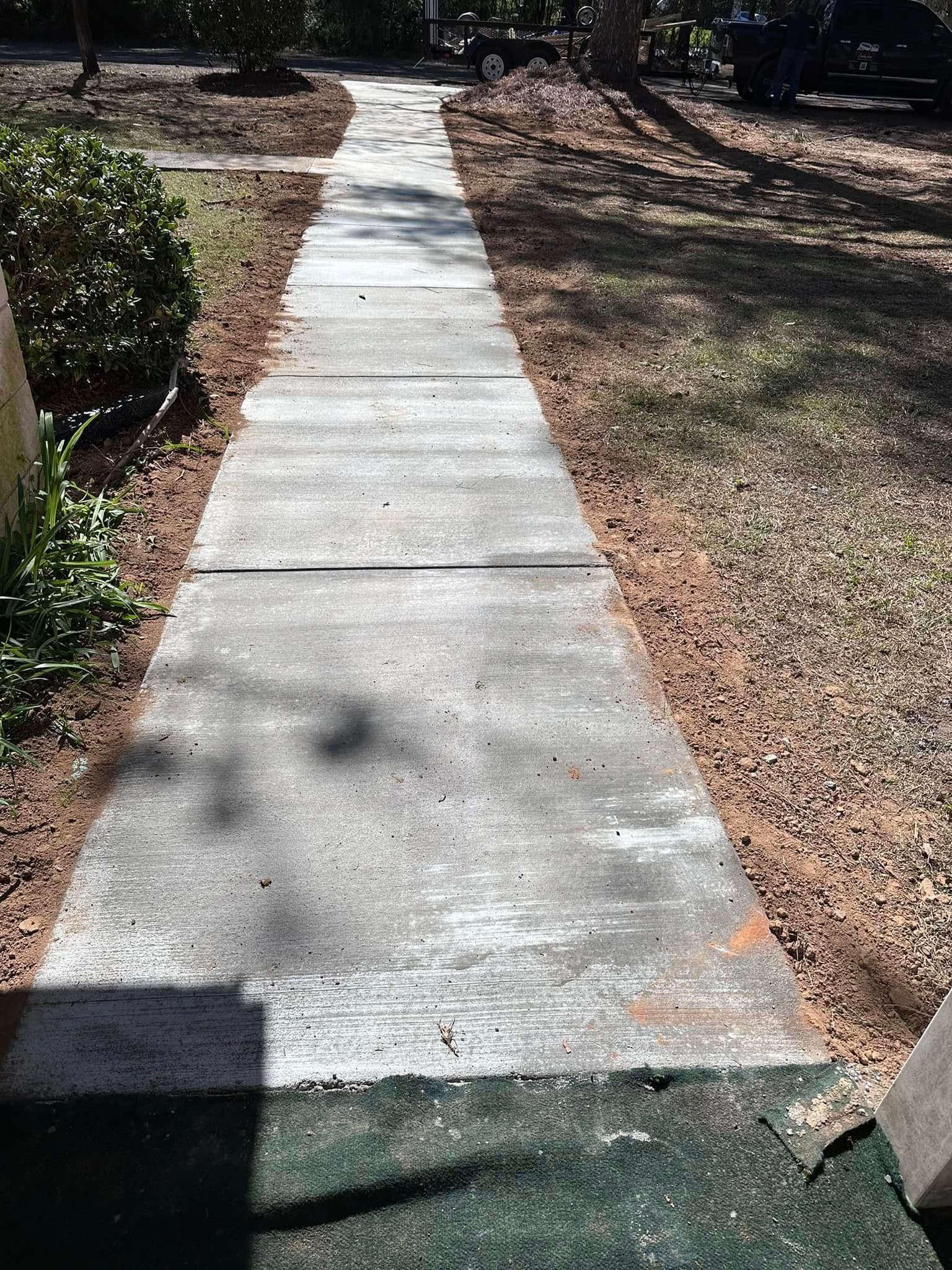
Concrete repair works only when the surrounding material is stable and the bond between old and new is solid. The damaged section is cut back until the edges are free of cracks and the base is sound, which prevents the repair from debonding or cracking along the perimeter. The surface is cleaned and roughened to increase the contact area, and a bonding agent is brushed or sprayed onto the prepared concrete to create a chemical bridge between the old and new material. The repair mix is chosen based on the depth of the damage and the exposure the surface will face, with polymer-modified materials used where flexibility or rapid curing is needed.
Once the repair has cured, you'll notice a surface that is flush with the surrounding concrete, doesn't crack at the edges, and handles the same traffic as the original slab. Driveways no longer show spalling at control joints, walkways are level and safe to walk on, and patios shed water correctly without pooling in repaired sections.
The work includes cutting, cleaning, bonding, filling, and finishing. It does not include full slab replacement, subgrade stabilization, or structural foundation repair beyond cosmetic surface restoration. The feasibility of repair depends on the extent of the damage and whether the slab is still structurally intact underneath the visible cracking or spalling.
What Property Owners Ask About the Work
Homeowners in Fayetteville and McDonough often ask about when repair is appropriate and what the finished repair will look like compared to the rest of the slab.
When should you repair concrete instead of replacing it?
Repair is appropriate when the damage is localized, the surrounding concrete is sound, and the slab is not settling or moving. Spalling, surface cracks, and small broken sections can be repaired if the base underneath is stable. Widespread cracking, significant settlement, or slabs with ongoing movement typically require replacement rather than repair.
How is the repair material bonded to the existing concrete?
The damaged area is cut or ground to expose clean, solid concrete, and the surface is cleaned to remove dust, oil, and loose particles. A bonding agent is applied to the prepared surface, and the repair material is placed while the bonding agent is still tacky. The bond relies on both mechanical grip from the roughened surface and chemical adhesion from the bonding agent.
What does the repaired area look like after the work is finished?
The repair is finished to match the texture and level of the surrounding slab, but the color of new concrete will be lighter than older, weathered concrete. Over time, the repair will darken and blend as it cures and is exposed to the same conditions as the rest of the surface. The goal is a flush, stable repair that performs like the original concrete, not an invisible patch.
How long does it take for a repair to cure before the surface can be used?
Most repairs can handle light foot traffic within 24 hours and full vehicle loads within three to seven days, depending on the material used and the thickness of the repair. Rapid-set materials cure faster but are used selectively based on the repair conditions and temperature.
What should you watch for after a repair is completed?
Monitor the edges of the repair for any cracking or debonding, and check that the surface drains correctly without water pooling in or around the repaired area. If the original damage was caused by settlement or movement, watch for signs that the problem is continuing. Properly bonded repairs should not crack at the perimeter or sink below the surrounding slab.
Elite Contractors LLC also repairs cracked and spalled concrete in Peachtree City, Tyrone, Newnan, McDonough, and Jonesboro. Arrange an on-site evaluation to confirm whether repair will extend the life of your concrete or whether replacement is needed.